
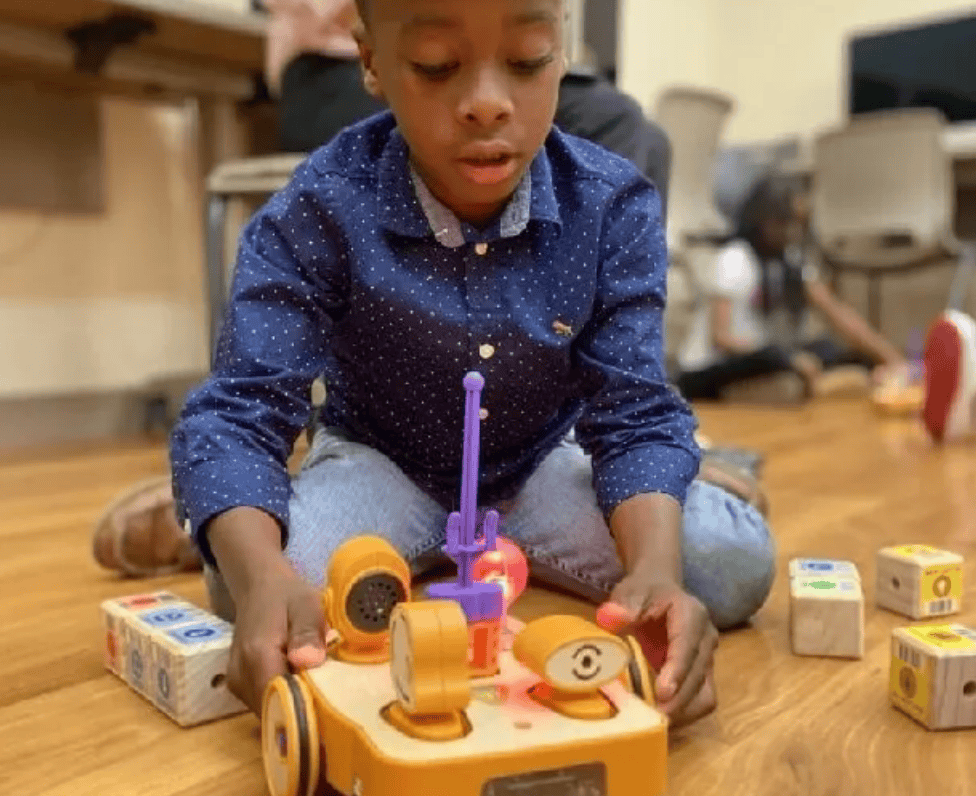
Families searching for private K–5 school enrollment in West Palm Beach for 2026–2027 can apply to The Foundations School, a private elementary school serving students from Kindergarten through Grade 5.
The Foundations School offers a small-school environment built around individualized instruction, evidence-based teaching, arts-integrated learning, ongoing assessment, and high academic expectations. Classes are capped at 15 students, with a 7:1 student-to-teacher ratio.
Applications are accepted throughout the admissions cycle. Because enrollment is limited, families considering placement for the 2026–2027 school year should begin the admissions process as early as possible.
2026–2027 Enrollment at The Foundations School: Quick Facts
| Enrollment Detail | The Foundations School |
| Location | West Palm Beach, Florida |
| Grades Served | Kindergarten–Grade 5 |
| Maximum Class Size | 15 students |
| Student-to-Teacher Ratio | 7:1 |
| Instruction | Personalized, evidence-based and differentiated |
| Reading Approach | Science of Reading practices |
| Learning Model | Small-group learning, arts integration, project-based learning |
| Assessment | Ongoing assessment; K–5 i-Ready reading and math assessments |
| Published Tuition | $16,500 per year |
| Required Family Contribution | $200–$2,000 annually based on household size and income |
| Scholarship Structure | Step Up for Students + CCE Scholarship |
| Application Fee | $50 non-refundable; credited toward annual family contribution |
| Application Timing | Applications accepted throughout the admissions cycle |
| Enrollment Availability | Limited; families are encouraged to apply early |
| Campus Address | 2400 Metrocentre Blvd., West Palm Beach, FL 33407 |
| Admissions Phone | 561-805-9927 |
Is The Foundations School Accepting K–5 Applications?
Applications are accepted throughout the admissions cycle for Kindergarten through Grade 5.
Enrollment is limited, which means families interested in joining TFS should not wait until immediately before their desired start date to begin.
Starting early gives families time to:
- Visit the West Palm Beach campus
- Complete the application
- Apply for Step Up for Students
- Collect required student records
- Submit financial documentation
- Complete a family interview
- Complete any requested student classroom visit or assessment
- Receive an admissions decision
- Complete enrollment and orientation requirements
The availability of a specific grade can change during the admissions cycle, so families looking to enroll now should inquire about their child’s grade as their first step.
What Grades Can Students Apply For?
The Foundations School serves:
- Kindergarten
- Grade 1
- Grade 2
- Grade 3
- Grade 4
- Grade 5
TFS is specifically focused on the elementary years rather than operating as a K–12 school.
That K–5 structure allows the learning environment, academic supports, instructional practices, and enrichment opportunities to remain centered on elementary-age students.
What Is the 2026–2027 Admissions Process?
Families applying to The Foundations School move through a five-step admissions process.
Step 1: Inquire and Visit the Campus
The first step is to connect with the admissions team and arrange a campus visit.
A visit gives parents an opportunity to evaluate the school beyond what they can learn online.
Families can use the visit to discuss:
- Current availability in the child’s grade
- Class size
- Academic expectations
- Individualized instruction
- Reading and mathematics support
- Arts-integrated learning
- Student assessment
- Tuition
- Step Up for Students
- Family contribution requirements
- Required enrollment documents
Parents should also consider whether the small-school environment fits the way their child learns.
Step 2: Complete the Online Application
After deciding to move forward, families complete the online application.
Submitting the application formally begins the admissions review.
The application process also requires a $50 non-refundable application fee.
That fee is not an additional charge on top of the family’s annual contribution. The $50 is credited toward the family’s Required Minimum Family Contribution for the school year.
Families should complete every requested portion of the application rather than leaving sections incomplete.
Step 3: Apply for Scholarships and Submit Required Documents
The next stage combines scholarship requirements with enrollment documentation.
Families must apply through Step Up for Students and provide the resulting Award ID Number so scholarship funds can be applied toward tuition.
Parents complete the Step Up application themselves. TFS cannot apply for the scholarship on a family’s behalf.
Families should also prepare the required school and financial documents so their application can be reviewed without unnecessary delays.
Step 4: Complete the Family Interview and Student Visit
The admissions process includes an opportunity for the TFS team to learn more about the prospective student and family.
Depending on the application, this stage may include:
- A family interview
- A student interview
- A classroom visit
- An academic assessment
This step helps determine whether the school environment and educational approach are an appropriate fit for the child.
Step 5: Receive the Admissions Decision
After the application, documentation, scholarship requirements, and applicable interview or student visit are complete, families receive an admissions decision.
Families offered admission receive the next steps required for enrollment and orientation.
What Documents Should You Prepare Before Applying?
Gathering required records before submitting the application can help avoid delays.
Families should be prepared to provide documentation including:
Child’s Birth Certificate
The birth certificate helps verify the student’s identity and age.
For Kindergarten enrollment, the child must be 5 years old on or before September 1.
Florida Certificate of Immunization
Families should prepare the applicable Florida immunization documentation required for school enrollment.
School Entry Health Documentation
Current school-entry health documentation should be completed as required, including the appropriate portions completed by the child’s healthcare provider and parent or guardian.
Most Recent Federal Tax Form 1040
TFS uses household size and Adjusted Gross Income from the family’s most recent federal tax return to determine the Required Minimum Family Contribution.
A federal Tax Form 1040 is therefore an important part of the financial process.
Previous School Records
For students who have attended another school or preschool program, families should prepare relevant educational records, which can include:
- Report cards
- Transcripts
- Attendance information
- Test results
- Previous academic records
These records give educators additional information about the student’s academic history.
Step Up for Students Award ID Number
Families must provide their Step Up for Students Award ID Number so scholarship funds can be applied toward tuition.
The Award ID should not be confused with other numbers associated with a Step Up application or student account.
How Can Parents Avoid Enrollment Delays?
Families trying to enroll for 2026–2027 should make application completeness a priority.
Common problems that can slow an enrollment review include:
- Missing records from a previous school
- An incomplete enrollment application
- Starting an online application but not submitting it
- Missing required documentation
- Delays completing the Step Up for Students process
- Not providing the Step Up Award ID
- Not completing requested interviews, visits, or assessments
- Not paying the required $50 application fee
A practical approach is to gather student records and begin the Step Up process while completing the school application, rather than treating each task as a completely separate stage.
How Much Is Tuition at The Foundations School?
Current tuition at The Foundations School is:
$16,500 per year
However, families do not pay the full $16,500 tuition amount under the current funding structure.
Tuition is covered through a combination of:
- Step Up for Students scholarship funding
- The family’s Required Minimum Family Contribution
- CCE Scholarship support
This distinction is especially important for parents who see the $16,500 tuition figure and assume that is what they would need to pay personally.
How Much Does a Family Actually Contribute?
The Required Minimum Family Contribution ranges from:
$200 to $2,000 for the entire school year
The amount assigned to a family depends on:
- Household size
- Adjusted Gross Income
- The family’s most recent federal tax return
The family contribution is therefore not one fixed amount for every household.
For example, the relevant numbers should be understood this way:
| Cost | What It Means |
| $16,500 | Published annual tuition |
| $200–$2,000 | Family’s required annual contribution based on household circumstances |
| Step Up Scholarship | Scholarship funding applied toward tuition |
| CCE Scholarship | Covers remaining tuition after Step Up funding and family contribution |
Parents considering enrollment should determine their household-specific contribution rather than assuming they will owe the full published tuition.
How Does the CCE Scholarship Work?
After the Step Up for Students scholarship and the family’s Required Minimum Family Contribution are applied toward the $16,500 tuition, any remaining tuition balance is covered through a CCE Scholarship.
Families do not complete a separate application for this scholarship.
They are automatically enrolled in the CCE Scholarship program when they complete and submit the Enrollment & Financial Agreement.
Families receiving the scholarship are expected to comply with its terms and conditions to continue receiving the support.
Does Every Family Have to Apply for Step Up for Students?
Yes. Families must apply through Step Up for Students as part of the TFS tuition structure.
Once the scholarship is awarded, parents need to provide the Award ID Number so the scholarship funds can be applied.
Because Step Up is handled outside TFS, families should begin that application early rather than waiting for the rest of the school enrollment process to finish.
Are There Additional Required School Fees?
The Foundations School requires a:
$50 non-refundable application fee
That $50 is credited toward the family’s annual tuition contribution.
There are no additional required fees for:
- Food
- Technology
- Textbooks
- Classroom supplies
- School spirit shirts
- Activity fees
This makes it easier for families to understand the required annual cost without adding several separate mandatory school charges after enrollment.
Payment plans are also available for families who want to make their required contribution throughout the school year.
Families experiencing a significant change in financial circumstances may request an additional financial review.
What Is the Maximum Class Size?
TFS caps classes at:
15 students
The school also maintains a:
7:1 student-to-teacher ratio
Small classes support the school’s emphasis on individualized attention, personalized instruction, ongoing assessment, and differentiated learning.
For families leaving a larger classroom environment, this is one of the most important characteristics to evaluate during a campus visit.
Parents can ask how their child’s particular grade is structured and how teachers use small-group instruction during reading, mathematics, and other academic periods.
What Type of Student May Be a Good Fit for TFS?
The Foundations School is designed for families looking for a small, supportive elementary environment with high expectations and individualized instruction.
It may be a strong fit for families seeking:
- Small class sizes
- Individualized academic attention
- Evidence-based teaching
- Personalized instruction
- Creative and hands-on learning
- Regular assessment
- Academic support matched to student needs
- Arts-integrated instruction
- Opportunities for global collaboration and enrichment
- A K–5 learning environment
The admissions process, campus visit, family interview, and student visit or assessment give both the family and educators an opportunity to determine fit before enrollment is finalized.
What Does the K–5 Academic Program Include?
Students receive instruction in core academic areas within a learning model that incorporates individualized support and creative practice.
The program includes:
- Reading
- Writing
- Mathematics
- Science
- Social studies
- Arts integration
- Technology
- Social-emotional learning
- Project-based learning
- Differentiated instruction
Academic instruction is aligned with Florida standards and is supported by regular assessment.
How Is Reading Taught?
Literacy instruction incorporates the Science of Reading.
The approach addresses foundational components of literacy, including:
- Phonemic awareness
- Phonics
- Fluency
- Vocabulary
- Comprehension
Reading instruction also benefits from the school’s small classes, differentiated instruction, and assessment-driven approach.
Rather than relying on one instructional approach for every student, educators can use assessment information to provide additional support based on individual learning needs.
How Are Students Assessed?
Assessment is used to help guide instruction.
Students in Kindergarten through Grade 5 complete i-Ready assessments in reading and mathematics three times per year.
Results help educators evaluate student progress and determine where additional or differentiated instruction may be needed.
Families considering enrollment can ask during their visit how academic data is used within the classroom rather than simply asking how often students are tested.
Does TFS Offer Individualized Instruction?
Yes. Personalized instruction and ongoing assessment are central parts of the educational model.
Small classes allow teachers to identify differences in student readiness, academic strengths, and areas requiring additional attention.
Differentiated instruction can then be used so that students do not have to receive exactly the same support in exactly the same way.
This is particularly relevant for parents searching for a private elementary school because their child may benefit from more individual academic attention.
How Does Arts Integration Work?
TFS incorporates the arts into academic learning rather than treating creativity as disconnected from classroom instruction.
Arts integration can connect academic content with creative experiences involving visual arts and other forms of expression.
The approach gives students additional ways to engage with concepts while supporting the broader emphasis on creativity and hands-on learning.
Families considering TFS specifically for this feature should ask to see examples of arts-integrated learning during their campus visit.
What Is Project-Based Learning at TFS?
Project-based learning gives students opportunities to apply academic skills through meaningful tasks rather than relying exclusively on worksheets or isolated exercises.
Projects can support:
- Problem-solving
- Collaboration
- Communication
- Creativity
- Application of academic knowledge
This approach works alongside core academic instruction rather than replacing reading, mathematics, science, or other foundational subjects.
Does TFS Support Social-Emotional Learning?
Yes.
Social-emotional learning is integrated into the student experience, including approaches such as Morning Meetings and practices that support:
- Self-awareness
- Relationship skills
- Collaboration
- Responsible decision-making
- Emotional development
The broader K–5 environment is designed to address both academic learning and the skills students need to participate successfully in a classroom community.
Are There Opportunities for Global Learning?
Students in Grades 2–5 can participate in global learning and collaboration experiences through CCE’s broader educational programming.
These opportunities allow elementary students to engage with peers and perspectives beyond their immediate community.
For parents evaluating enrollment for Grades 2–5, global collaboration is one of the enrichment opportunities worth discussing during a school visit.
How Do Parents Monitor Student Progress?
Families have access to ongoing information about their child’s school experience.
Parent communication includes access to the Parent Portal, where families can monitor information such as:
- Grades
- Assignments
- Attendance
- Behavior
Report cards are provided during the year, and student-led conferences give families additional opportunities to review progress.
Regular communication between families and faculty is also expected throughout the school year.
What Should Kindergarten Parents Know Before Applying?
Families seeking private Kindergarten enrollment in West Palm Beach for 2026–2027 should begin by confirming age eligibility.
A child entering Kindergarten must be:
5 years old on or before September 1
Kindergarten students participate in the broader TFS educational model, including:
- Small classes
- Individualized instruction
- Science of Reading practices
- Arts integration
- Project-based learning
- Technology integration
- Social-emotional learning
- Ongoing assessment
- Differentiated instruction
Families should prepare the child’s birth certificate and required health and immunization documents as part of the enrollment process.
What Should Families Transferring Into Grades 1–5 Prepare?
Families moving a child from another elementary school should begin requesting school records early.
Those records may include:
- Most recent report cards
- Test results
- Attendance history
- Academic records
- Other relevant student documentation
Transferring families should also be prepared for a student visit, interview, or assessment if requested during the admissions review.
This allows educators to learn more about the prospective student’s academic needs before enrollment.
What Happens If a Grade Is Full?
Because enrollment is limited, availability can vary by grade.
Families interested in a grade that has reached capacity may need to wait for an opening.
This is another reason application timing and completeness matter.
Parents seeking 2026–2027 placement should complete the process as early as possible rather than assuming a seat will remain available later in the admissions cycle.
Can Families Tour Before Applying?
Yes. A campus visit is the first step in the current admissions process and gives families an opportunity to decide whether they want to continue the formal application.
During the tour, parents should look closely at:
- Classroom size
- Teacher interaction with students
- Learning spaces
- Student engagement
- Arts-integrated activities
- Academic expectations
- Support for individual learners
Families can also discuss admissions, scholarship requirements, grade availability, and tuition before deciding to submit an application.
Private K–5 Enrollment Checklist for 2026–2027
Parents ready to move forward can use this checklist:
| Enrollment Task | Status |
| Confirm your child is entering Kindergarten–Grade 5 | ☐ |
| Ask about current grade availability | ☐ |
| Schedule a campus visit | ☐ |
| Begin Step Up for Students application | ☐ |
| Gather child’s birth certificate | ☐ |
| Gather required immunization documentation | ☐ |
| Gather school-entry health documentation | ☐ |
| Request records from previous school or preschool | ☐ |
| Prepare most recent federal Tax Form 1040 | ☐ |
| Obtain Step Up Award ID Number | ☐ |
| Complete TFS online application | ☐ |
| Pay $50 non-refundable application fee | ☐ |
| Complete requested family interview | ☐ |
| Complete requested student visit or assessment | ☐ |
| Review admissions decision | ☐ |
| Complete Enrollment & Financial Agreement if admitted | ☐ |
| Complete enrollment and orientation steps | ☐ |
Why Apply Early for 2026–2027?
The most important reason to begin now is straightforward:
Enrollment is limited.
Applications are accepted throughout the admissions cycle, but waiting can reduce the likelihood that space remains available in the desired grade.
Beginning early also gives parents adequate time to coordinate several processes that involve organizations or documents outside the school itself, particularly:
- Step Up for Students
- Previous-school records
- Health documentation
- Tax documentation
Families with complete applications can move through the admissions process more efficiently than families still waiting for essential records.
How to Start Your 2026–2027 TFS Application
Families interested in private K–5 enrollment can begin with an inquiry and campus visit.
The Foundations School
Grades: Kindergarten–Grade 5
Address: 2400 Metrocentre Blvd., West Palm Beach, FL 33407
Phone: 561-805-9927
Families looking for 2026–2027 private elementary school enrollment in West Palm Beach should begin by confirming availability in their child’s grade and arranging a visit.
If the combination of small classes, a 7:1 student-to-teacher ratio, individualized instruction, evidence-based academics, arts-integrated learning, and a $200–$2,000 income-based annual family contribution fits what you are looking for, the next step is to inquire, tour the campus, and complete the application process for The Foundations School.